
Matt Pittman, the founder and face of Meat Church BBQ, has an estimated net worth in the range of $5 million to $10 million as of 2026. Most third-party estimates cluster around $7M to $10M, and those figures are credible given the scale of the business: a nationally distributed seasoning and rub brand, a flagship retail store, a YouTube channel with over 1.1 million subscribers, and documented partnerships with major brands like Traeger and ThermoWorks. That said, no audited financial statement is public, so these are reasoned estimates based on observable revenue signals, not confirmed figures.
Meat Church Net Worth Estimate: How It’s Calculated

Marcus Henley
1 Jun 2026
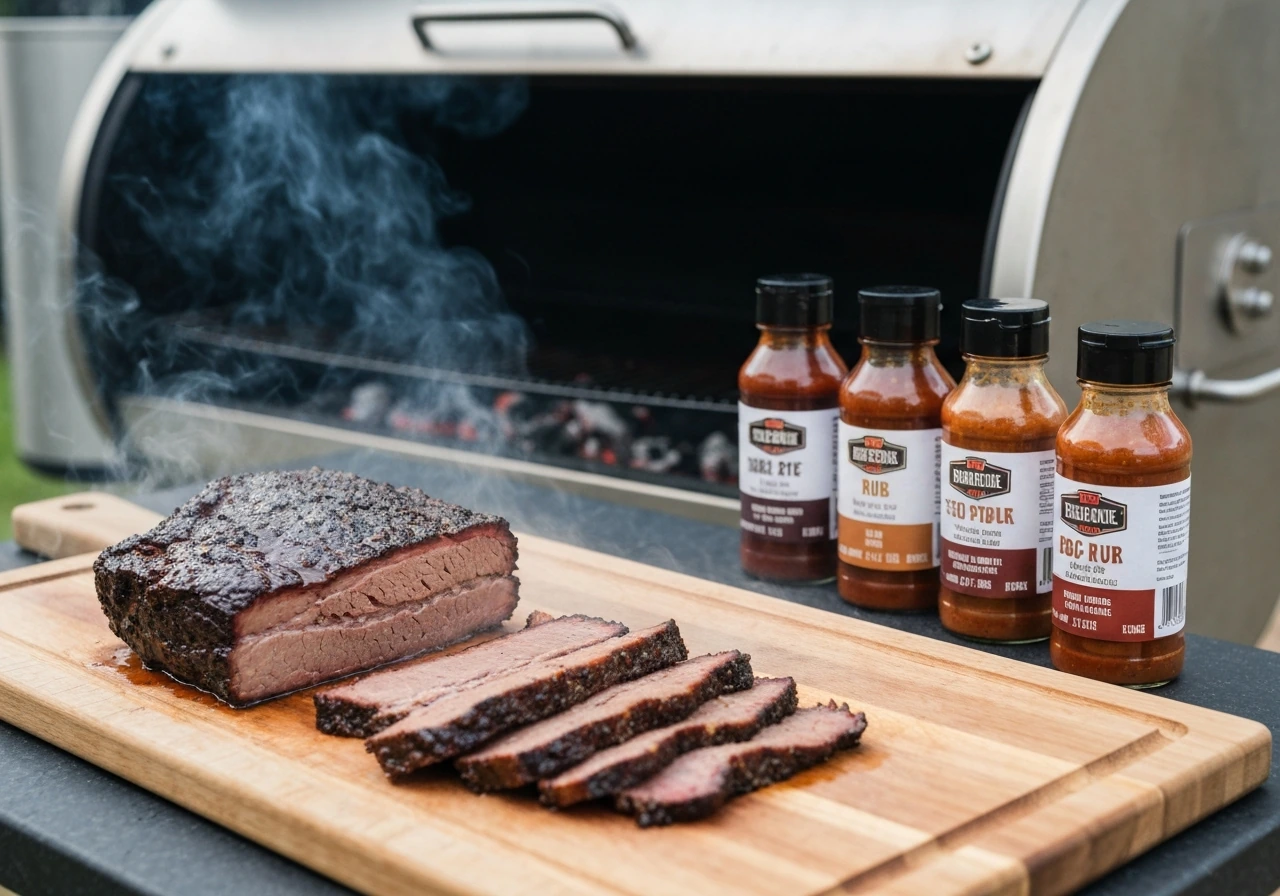
Who Meat Church is and how they make money
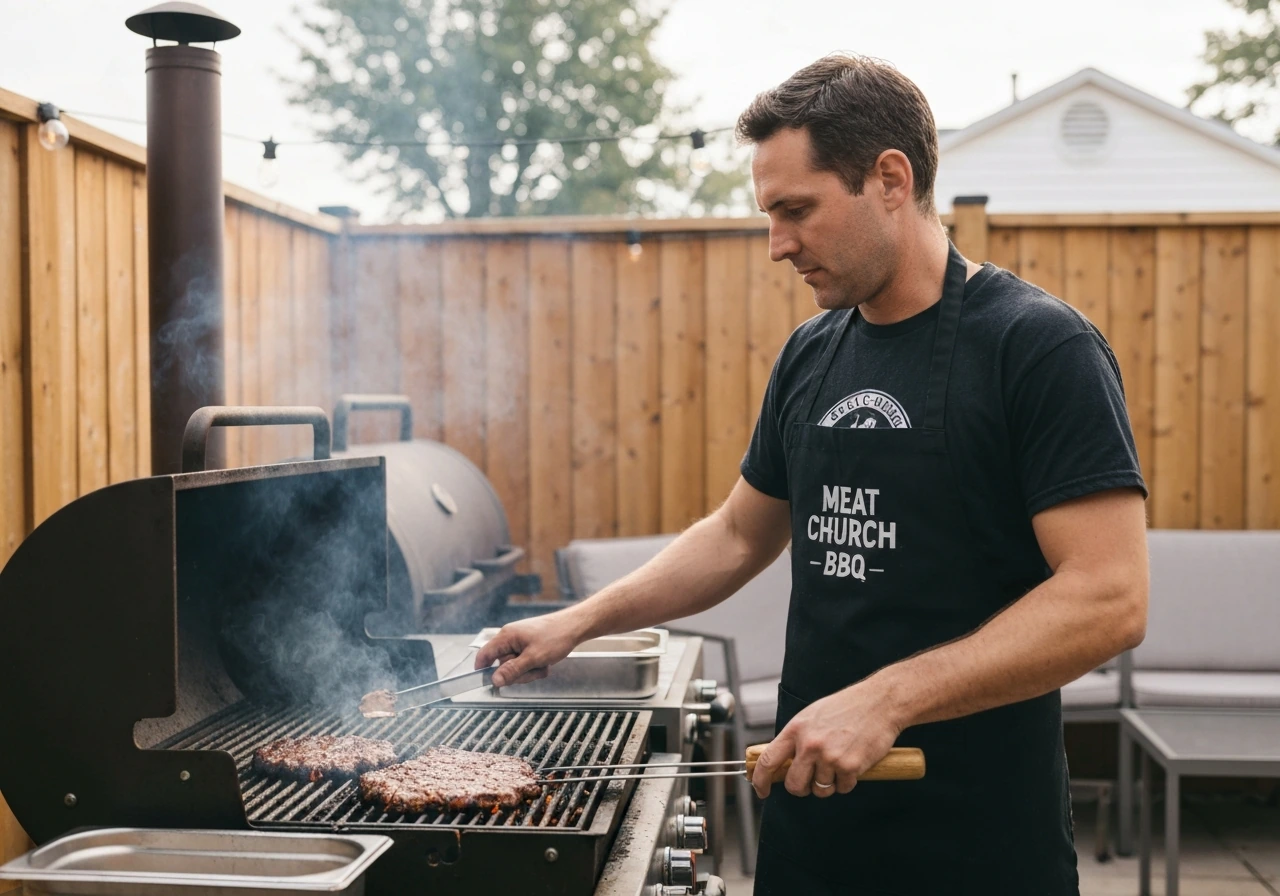
Meat Church is a BBQ brand founded by Matt Pittman, based in Waxahachie, Texas. Pittman is the public face, content creator, and business owner behind the brand. Traeger Grills, one of the most prominent names in the grilling space, describes him simply as 'Founder of Meat Church BBQ' and has featured him extensively in branded content. The brand started as a seasoning and rub company and grew into a full lifestyle BBQ brand with a retail presence, digital media operation, and wholesale distribution network.
The business earns money through several distinct channels. Direct-to-consumer product sales on the official website include individual rubs, brines, sauces, and bundles, with prices ranging from around $8 for a single sauce up to $65 for premium sets. The brand also operates a flagship retail store at 114 W. Main St. in downtown Waxahachie, which opened as a physical presence for fans and local customers. Beyond direct sales, Meat Church operates a wholesale distribution network with thousands of retail partners across the country, which third-party BBQ retailers confirm by stocking SKUs like Meat Church Blanco Rub. The brand is legally structured as Meat Church, LLC, and holds registered trademarks including 'MEAT CHURCH,' which protects its brand IP across product categories.
Meat Church net worth estimate: current range
The most reasonable current estimate for Matt Pittman's net worth, which is essentially synonymous with the value of the Meat Church brand and its associated assets, sits between $5 million and $10 million. Two of the more commonly referenced third-party estimate sites put the figure at $7M and $10M respectively. Neither is based on audited books, but both align with what the visible business metrics suggest is plausible. The lower end of the range ($5M) accounts for uncertainty around liabilities, inventory costs, and overhead tied to wholesale distribution and retail operations. The upper end ($10M) reflects the cumulative brand equity built over years of content creation, national retail distribution, and high-profile brand partnerships.
What's driving the money: the main revenue sources
YouTube and social media
The Meat Church BBQ YouTube channel (handle @meatchurchbbq) has around 1.1 to 1.15 million subscribers and has accumulated over 131 million total views across roughly 396 videos as of April 2026. Monthly views run in the range of 100,000 to 300,000 depending on upload cadence. Using standard CPM-based estimates, analytics tools like vidIQ put monthly YouTube ad revenue at roughly $11,000 to $12,000 per month, which works out to somewhere in the range of $130,000 to $145,000 per year from ad monetization alone. That number is not enormous on its own, but YouTube's real value to Meat Church is as a marketing engine that drives product sales, brand awareness, and sponsorship deals.
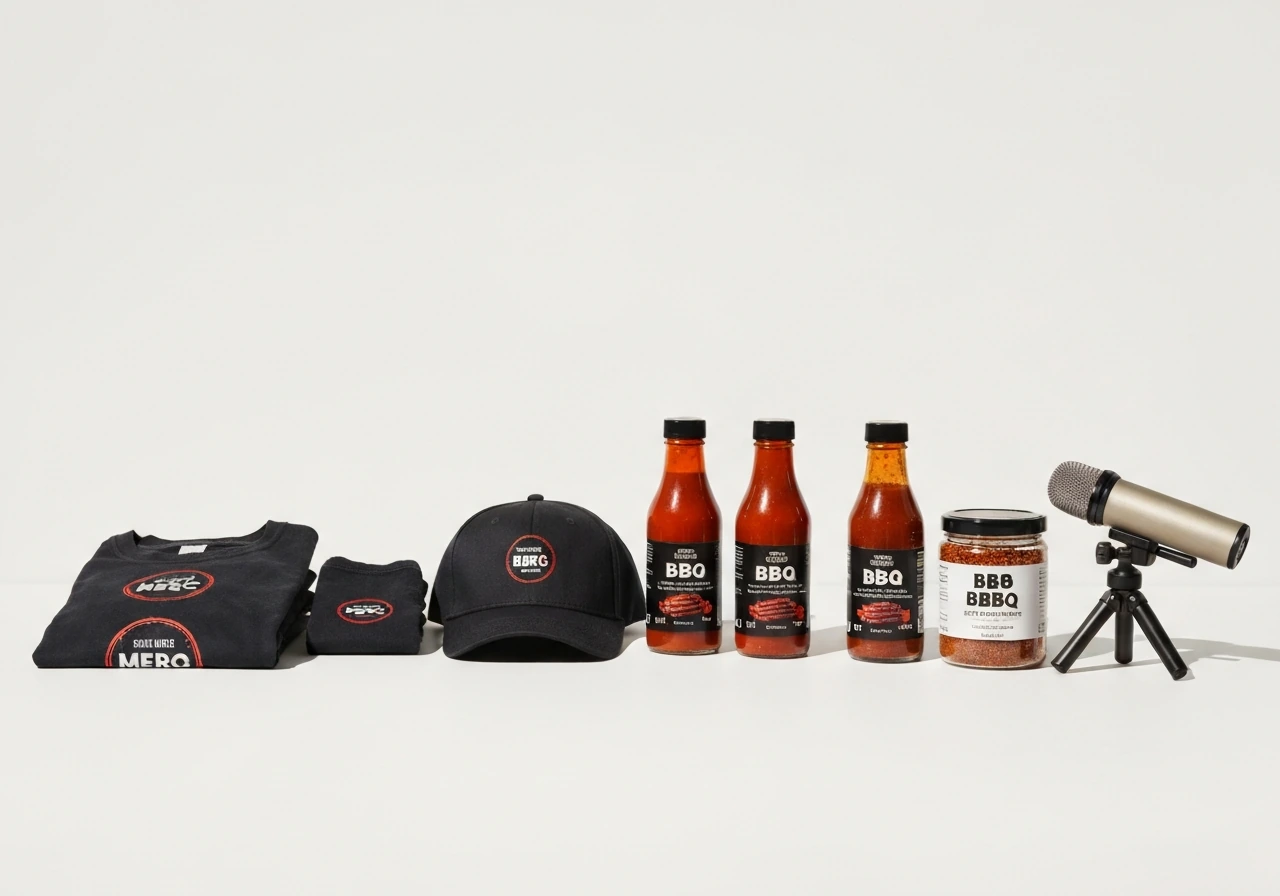
Merch, rubs, sauces, and product sales

Product sales are almost certainly the core of Meat Church's revenue. The online store sells individual items starting around $8 (like the Holy Cola BBQ Sauce), mid-range items like the Bird Bath Poultry Brine at $15, bundles like the Turkey Combo at $24, and premium sets like The Fab 5 at $41 and The Ocho at $65. With thousands of retail partners carrying Meat Church products nationwide, the wholesale side of the business represents significant recurring volume. Wholesale margins are lower per unit than DTC, but the scale of national distribution adds up quickly. The wholesale portal (wholesale.meatchurch.com) and a dedicated PO Box for check payments suggest this is a structured, operationally mature distribution side of the business.
Sponsorships and brand partnerships
Meat Church has documented brand partnerships with some of the biggest names in the BBQ and cooking space. ThermoWorks, the precision thermometer brand, has a dedicated Meat Church landing page, and sponsorship analytics tools list ThermoWorks as the top sponsor of the Meat Church BBQ YouTube channel, with paid integrations across many videos. Traeger Grills is another high-profile co-brand relationship, featuring Matt Pittman prominently in their educational and marketing content. These aren't just one-off mentions. They represent ongoing commercial relationships that generate sponsorship income, free product, and amplified reach. Sponsorship deals for YouTube channels with 1M+ subscribers in a niche lifestyle category can range from a few thousand dollars per video to significantly more depending on the agreement structure.
Business ownership and brand IP
The most significant component of Matt Pittman's net worth is likely the equity value of Meat Church, LLC itself. The business holds registered trademarks (including USPTO registration number 4652571 for 'MEAT CHURCH'), operates a physical retail location, runs wholesale distribution at scale, and generates revenue across multiple product lines. The equity value of a consumer brand at this stage is typically estimated at a multiple of annual revenue or EBITDA. If Meat Church's annual revenues are in the multi-million-dollar range (which the wholesale network and DTC sales signals suggest), even a modest 2x to 4x multiple would put the business equity alone in the $4M to $10M range. Business valuation depends heavily on factors that aren't publicly disclosed, including margins and any debt, which is why the net worth estimate remains a range.
How net worth estimates like this are calculated

Net worth is assets minus liabilities. For a private business owner like Matt Pittman, that means adding up the estimated market value of all assets (business equity, real estate, cash, investments) and subtracting known or estimated debts (business loans, inventory financing, mortgages). Because Meat Church is a private LLC, it doesn't file public financial statements. That means every external estimate is built from observable signals rather than confirmed numbers.
- YouTube ad revenue: estimated from public subscriber/view counts using CPM range assumptions (typically $2 to $8 per 1,000 views for lifestyle/cooking content)
- Product sales: inferred from product pricing, SKU breadth, retail distribution scale, and website traffic signals
- Sponsorship income: estimated from documented brand partnerships and integration frequency
- Business equity: modeled as a multiple of likely annual revenue, based on comparable consumer brand valuations
- Trademark and IP value: included as part of overall business equity, not separately broken out
- Personal assets: real estate and other investments are not publicly documented, so they are not factored into the core estimate
The figures published by third-party net worth sites ($7M, $10M) are not independently audited. Third-party net worth site figures for Matt Pittman, such as the UpdatedNetworth.com estimate, are not independently audited, so they should be treated as estimates rather than confirmed wealth statements. They use the same observable signals listed above and make assumptions about margins and business multiples. Treat them as informed estimates, not confirmed wealth statements. The most honest answer is a range, and $5M to $10M reflects the realistic spread given what is publicly visible.
How Meat Church's wealth has likely grown over time
Meat Church started as a small BBQ rub brand in Texas, built around Matt Pittman's passion for competitive barbecue. The early years were primarily about establishing the product line and growing a local following. The YouTube channel and social media presence accelerated growth significantly, turning a regional brand into a nationally recognized name in BBQ culture. The wholesale expansion, bringing Meat Church products into thousands of retail locations across the country, marked a major inflection point in revenue scale. The opening of the flagship retail store in downtown Waxahachie, covered by the Dallas Observer, signaled a brand mature enough to support a physical retail presence beyond just online sales. The Traeger and ThermoWorks partnerships further amplified both revenue and brand equity by associating Meat Church with two of the most credible names in the grilling and BBQ equipment space.
| Phase | Key Milestone | Estimated Wealth Impact |
|---|---|---|
| Early stage | Brand launch, initial rub/seasoning line, local Texas presence | Minimal, primarily business reinvestment |
| Growth stage | YouTube channel growth, DTC online sales, social media following | Net worth likely in low single-digit millions |
| Expansion stage | Wholesale distribution to thousands of retail partners nationally | Significant revenue scale, net worth growth into $3M–$6M range |
| Maturity stage (current) | Flagship retail store, Traeger and ThermoWorks partnerships, 1.1M+ YouTube subscribers | Estimated $5M–$10M net worth range |
Clearing up the confusion: which 'Meat Church' does this cover?
There is sometimes confusion when people search 'Meat Church net worth' because the term can refer to the brand, the YouTube channel, or the person. If you are looking for a broader comparison, you can also review art pope net worth as another private-industry figure example. If you are specifically looking for the pastor Ashley Wooldridge net worth question, you may want to cross-check which person the sources are referring to before using any numbers. To be precise: this estimate refers to Matt Pittman, the individual founder and owner of Meat Church, LLC. If you came here from a query like andy priest houston net worth, that would be a different person than Matt Pittman, so this estimate should not be mixed with that profile matt pittman houston net worth. If you want the figure people commonly discuss, the Richard Asprey net worth searches typically trace back to the same type of third-party estimate methodology net worth estimate. If you are specifically looking for Pastor Godman Akinlabi’s net worth, the figure will come from his own career earnings and sources rather than Meat Church’s business metrics To be precise. If you came here from an “asap preach net worth” search, this guide is the same style of estimate, focused on the public signals behind Matt Pittman’s wealth. The brand and the person are effectively the same for net worth purposes because Pittman is the principal of the LLC and the sole documented face of the operation. There is no publicly known co-owner, investor, or separate entity that would split the business equity.
It is also worth noting that 'Meat Church' as a search term is unlikely to be confused with any other major public figure or brand in the context of net worth research. The brand is distinct, trademarked, and clearly associated with Pittman and Waxahachie, Texas. If you have seen references to a 'Meat Church' in a completely different context (such as religious organizations that use similar language), those are not related to this BBQ brand or this net worth estimate.
For readers who follow net worth profiles across different industries, the methodology used here is consistent with how estimates are built for other private-business owners and content creators. Whether you're looking at BBQ entrepreneurs or figures from other fields, the same core framework applies: revenue signals, business equity multiples, and asset minus liability modeling. The honest answer is always a range, and this one sits firmly at $5M to $10M with $7M to $8M being the most defensible midpoint based on current evidence.
What could change the number
The estimate could move significantly in either direction depending on a few key factors. On the upside, a sale of the Meat Church brand or a private equity investment would immediately crystallize and likely increase the net worth figure. Expansion into new product categories, additional retail partnerships, or a major licensing deal would raise the revenue multiple and push business equity higher. On the downside, if wholesale distribution contracts were lost, YouTube monetization declined, or the brand faced significant competition from larger seasoning companies, the equity value would compress. Because Meat Church is a privately held LLC, any of these developments would only become publicly visible through press coverage, trademark filings, or retail distribution changes, not through financial disclosures.
FAQ
Does the Meat Church net worth estimate refer to Matt Pittman’s personal money or the company’s value?
No, the range in the article is meant to estimate Matt Pittman’s personal wealth tied to Meat Church, not the company’s market value as if it were publicly traded. If you want a more direct “business value” comparison, you would typically look at inferred enterprise value (equity plus debt) rather than net worth, and you would need margin and debt assumptions that are not publicly available.
Could investors or partners lower Matt Pittman’s actual stake, making the estimate too high?
If Matt Pittman owns the LLC and there are no outside investors, then his personal net worth is closely linked to the LLC’s equity value. But if any minority investors, partner equity, or unreported debt exist, they could reduce what belongs to him even if the brand revenue signals look strong.
Why would the estimate change if Meat Church earns more from wholesale versus direct-to-consumer sales?
Yes. The midpoint can be skewed either direction depending on the assumed wholesale mix. If more volume is coming from wholesale, margins per unit are usually thinner, which can reduce the multiple applied to earnings even if overall sales look healthy.
How much can hidden or changing liabilities (like loans or inventory financing) affect Meat Church net worth estimates?
Net worth estimates are sensitive to debt, especially inventory and working capital lines. The article notes liabilities are uncertain, so a scenario like higher inventory financing, larger unpaid vendor terms, or business loans would push net worth lower without necessarily changing revenue.
Does YouTube ad revenue alone account for Meat Church’s earnings, or are other factors missing from the estimate?
The YouTube figures described are typically ad-revenue signals only. Real monetization can be higher or lower depending on how many videos are sponsor-led, whether mid-roll rates change, and whether earnings fluctuate with advertiser demand.
What’s the biggest assumption behind valuing a private brand like Meat Church, and how could it be wrong?
For private LLCs, you cannot verify equity value using audited statements, so estimates often use revenue or EBITDA multiples plus assumptions about costs. If Meat Church’s effective profit margin is lower than assumed, the equity multiple would not translate into the same net worth range.
If Meat Church was sold, would the net worth number automatically match the sale price?
A brand sale would usually be priced based on a combination of trailing earnings, growth rate, customer retention, channel mix, and brand/IP strength. The article mentions brand equity and partnerships, but the final price would still depend on diligence findings like inventory health, chargebacks, and category risk.
What happens to Meat Church net worth if retail partners reduce or stop carrying the products?
If wholesale distribution shrinks, the estimated equity value can fall even faster than revenue signals suggest, because profit margins and negotiating power with retailers often degrade. Retail partner “de-listing” can also create a lag where revenue appears stable for a short period before dropping.
Do trademarks and brand recognition automatically increase net worth, or can there be limitations?
Trademark and brand strength can support valuation, but trademarks are not always the same as transferable equity. If licenses are non-exclusive or owned by the LLC with restrictions, the buyer may pay less than expected even though the brand name is recognizable.
What’s the most common mistake people make when searching Meat Church net worth?
The “Meat Church” term can cause people to mix up different individuals or entities. If you track net worth across profiles, make sure you’re consistently referencing Matt Pittman (Waxahachie, founder of Meat Church BBQ) and not similarly named internet figures or unrelated organizations using “church” language.
What changes would most likely move the $5M to $10M range up or down in the next year?
Yes, over time. A new sponsorship structure, a licensing agreement for products, or improved DTC conversion rates could increase earnings, which would justify a higher business multiple. Conversely, price increases that reduce demand or rising ingredient costs could compress margins.
Does seasonal BBQ demand make net worth estimates less accurate at certain times of the year?
Seasonality matters for BBQ categories. If revenue concentrates around certain months and the business carries higher inventory ahead of peak seasons, liabilities and cash flow can swing even when annual sales look fine, which can affect perceived net worth mid-cycle.
How can I sanity-check whether a Meat Church net worth estimate still matches the visible business activity?
A good reality check is to compare multiple independent signals that the article already uses, like DTC product catalog pricing, wholesale partner activity, and consistent sponsorship appearances. If one signal weakens, a static net worth number becomes less reliable until the overall mix updates.
Next Articles

Art Pope Net Worth Estimate: Range, Sources, and Changes
Estimate of Art Pope net worth with range, key income sources, and why figures vary plus how to verify claims.
Fraser Anning Net Worth: Estimated Value, Assets & Income
Fraser Anning net worth estimate, assets, salary breakdown, legal costs and year-by-year financial timeline with sources

Andy Paul Corsair Net Worth 2026: Estimated Wealth & Sources
Andy Paul Corsair net worth (2026): $1.2M–$1.8M. Sourced breakdown, timeline, major assets, and methodology.